
The Deity: Pashupati, Lord of All Beings
Before the temple, there is the god. Pashupati is one of the principal forms of Lord Shiva. The name breaks down into:
Pashu: Meaning “animal,” “beast,” or more profoundly, “any living being that is tied down” (by the bonds of ignorance, desire, and karma).
Pati: Meaning “lord,” “master,” or “protector.”
So, Pashupatinath temple is the “Lord and Protector of All Living Beings.” He is the compassionate shepherd of souls, the one who can help his devotees untie the bonds (pasha) that keep them from achieving liberation (moksha). This isn’t a fierce, destructive Shiva, but a nurturing, guardian aspect, deeply connected to the natural world and every creature within it.
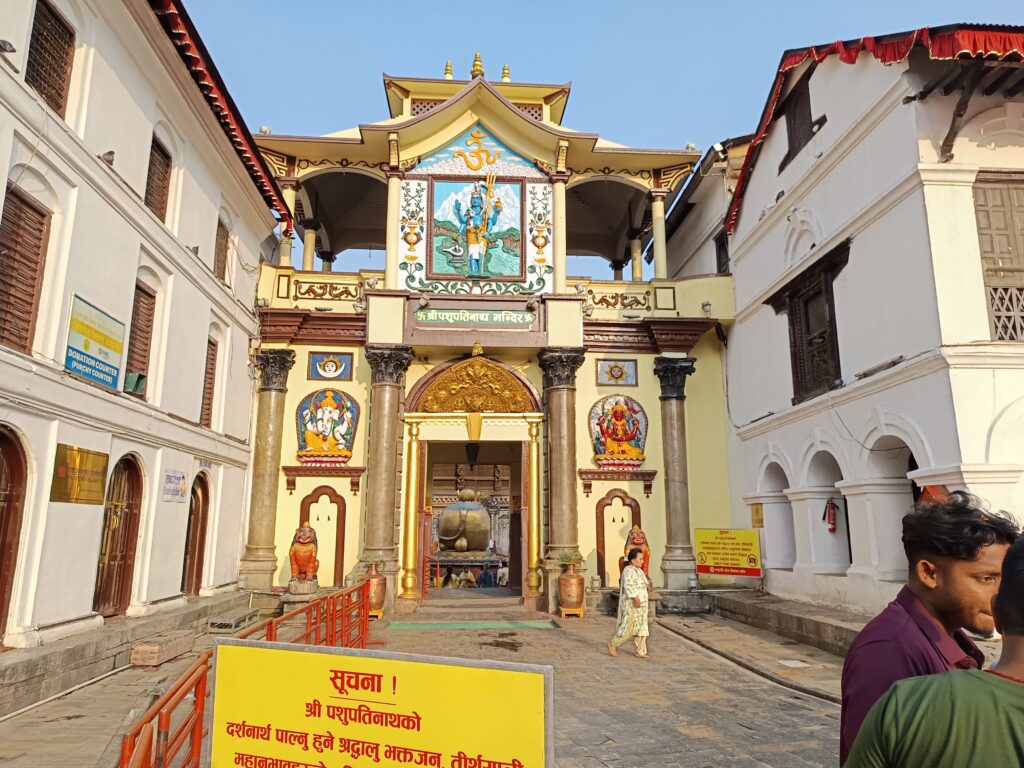
The Legend and Origins: Rooted in Myth and Miracle
The Architecture: A Symphony in Stone and Gold
The origins of the Pashupatinath temple are shrouded in the mists of time and legend, which makes it feel even more ancient and powerful.
The Lost Lingam: The most popular legend tells of Shiva and his consort, Parvati, taking the form of deer and roaming the forests on the banks of the Bagmati. During their play, Shiva lost one of his antlers. That very spot became known as Mrigasthali (“the Deer Abode”), the forest surrounding the main temple. Later, a cowherd found a cow routinely shedding her milk over a particular spot in the earth. Digging there, he discovered a radiant, self-manifested (swayambhu) Jyotirlinga—a lingam of light. This divine revelation marked the sacred spot where the temple was built. The discovery by a simple cowherd underscores the idea that the divine is accessible to all, not just priests or kings.
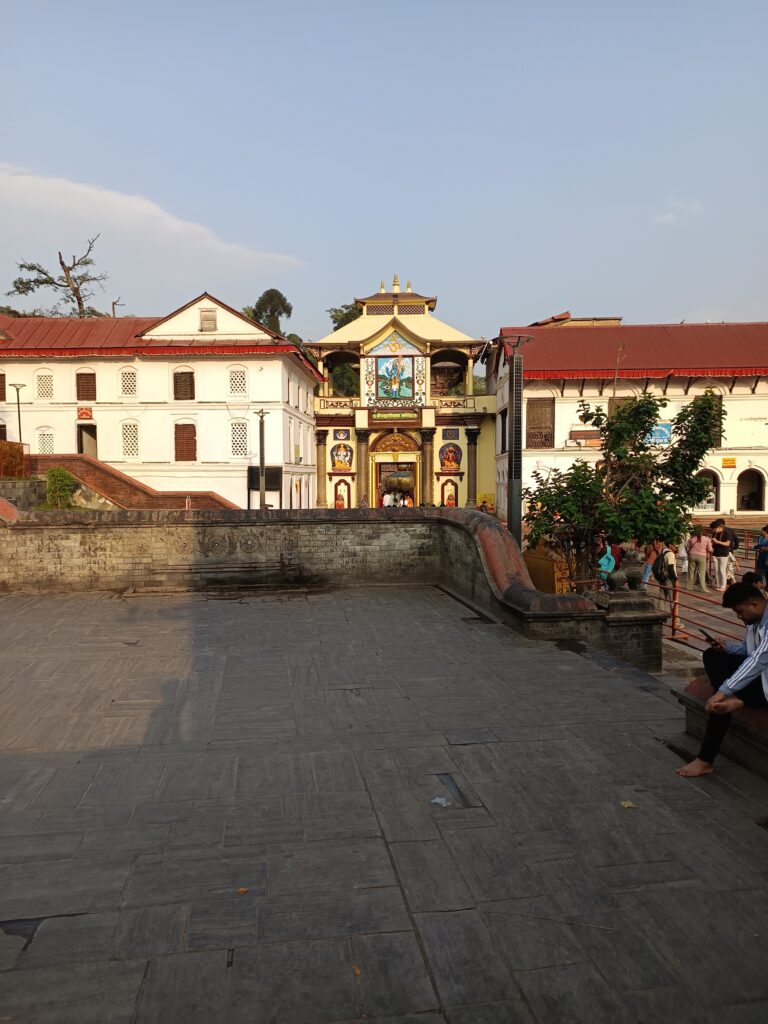
The main temple is a masterpiece of Newari architecture, a style native to the Kathmandu Valley.
The Pagoda Style: The Pashupatinath temple is a magnificent two-tiered golden pagoda. The roofs are gilded with copper and pure gold, donated by devotees and patrons over centuries. They gleam magnificently against the sky, a symbol of the temple’s celestial significance.
The Four Doors: The sanctum sanctorum has four main doors, all plated with silver. These doors face the cardinal directions. The main entrance, facing west, is a masterpiece of intricate wood carvings depicting various deities. The other three doors are opened only on special occasions.
The Sacred Lingam: Inside the inner sanctum is the object of ultimate devotion: a black stone lingam about four feet high with a five-faced head (Panchamukhi) facing the four directions and the sky. Each face represents a different aspect of Shiva:
Sadyojata (West): The Creator
Vamadeva (North): The Preserver
Aghora (South): The Destroyer and Regenerator
Tatpurusha (East): The Meditator
Isana (Sky): The Transcendent, Formless Supreme Reality
Only the face facing west (Sadyojata) is permanently visible; the others are covered. This five-faced form is exceptionally rare and signifies Shiva’s omnipresence and the totality of the universe.
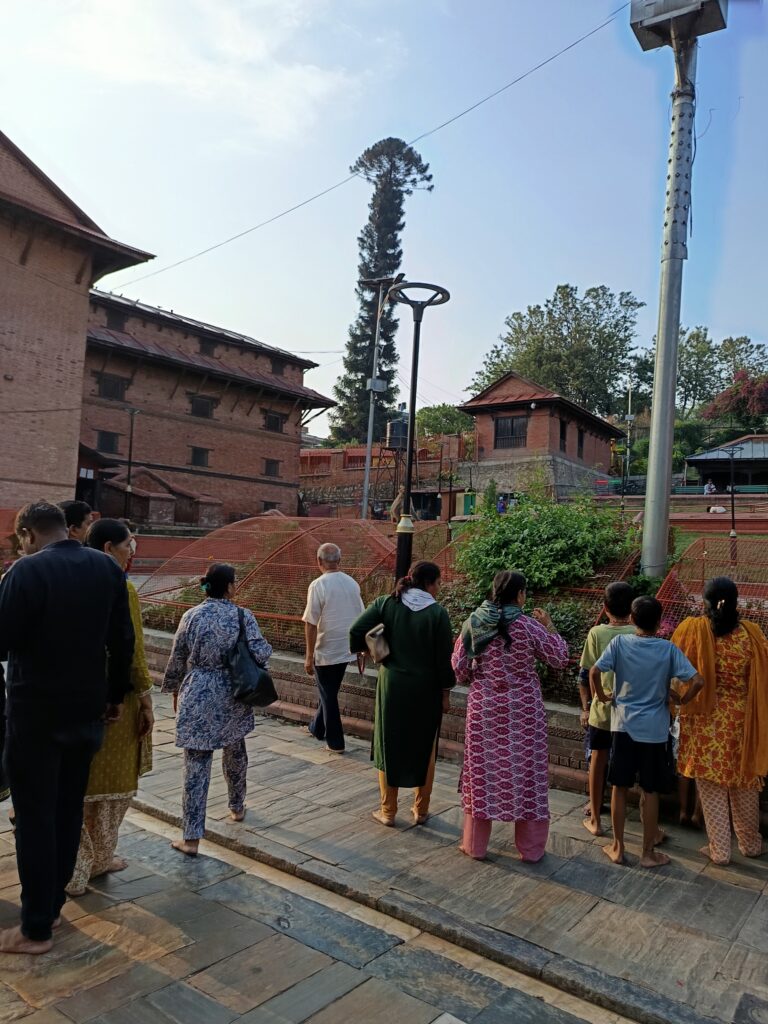
The Living Tapestry: More Than Just a Building
Pashupatinath is a sprawling complex, a small sacred city.
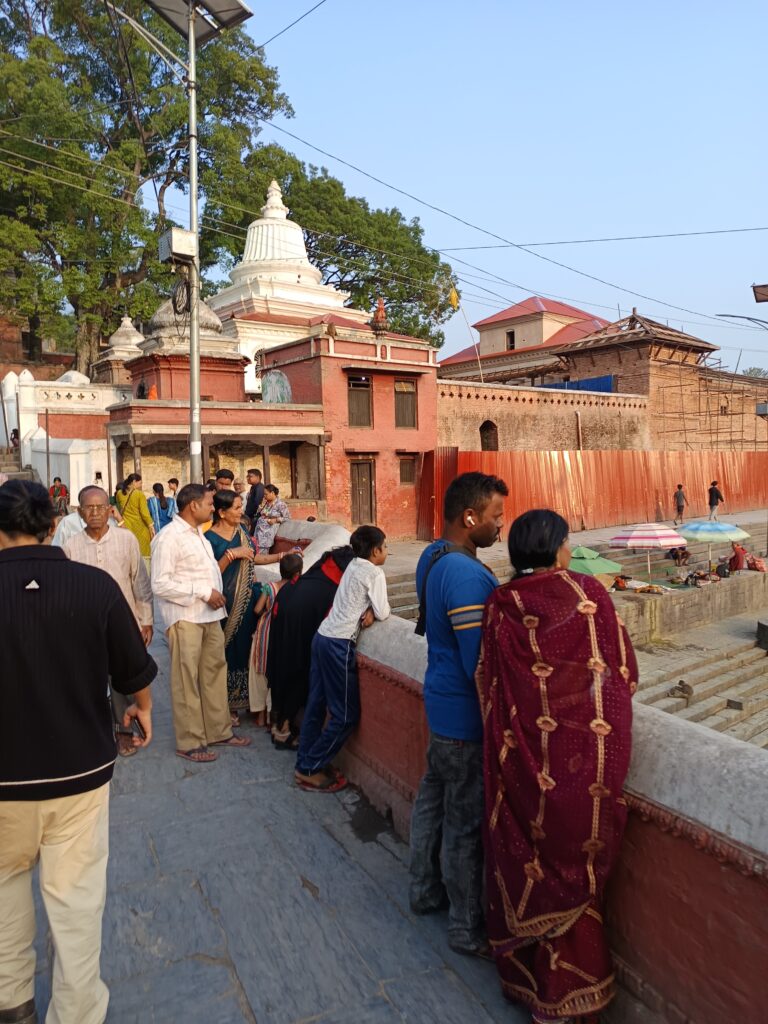
The Arya Ghat: This is the main and most sacred bathing ghat on the Bagmati River. It is the only place in Nepal where the water is considered pure enough to perform the Astra Puja (an offering with grains and seeds) during the festival of Shraaddha (a ritual for deceased ancestors).
The Cremation Ghats: The series of platforms along the river are where cremations take place 24 hours a day. The most prominent are the Brahmin Ghats and the Mrigasthali Ghats on the opposite side. The rituals are public, a constant, visceral reminder of the Hindu belief in the transience of the physical body and the eternal nature of the soul. The smoke, the chanting of “Ram Nam Satya Hai” (“The name of Ram is truth”), and the quiet resolve of the families create an atmosphere of profound acceptance.
The Sadhus: The wandering ascetics, often smeared in ash, with long matted hair, are an integral part of the landscape. Many are genuine spiritual seekers who have renounced worldly life. They meditate in caves, under trees, or in small kutis (huts) around the temple. Interacting with them (respectfully) can offer a glimpse into a world of intense austerity and devotion.
The Minor Shrines: The complex is dotted with hundreds of smaller temples and shrines dedicated to other deities—Ganesh, Kumar, Bhagwati, and the fierce goddess Guhyeshwari, whose temple is one of the 51 Shakti Peethas (the site where a part of Sati’s body fell). The presence of Guhyeshwari makes Pashupatinath a complete power center, representing both the masculine and feminine divine (Shiva and Shakti).
The Rituals and Festivities: The Pulse of Devotion
Daily Puja: The day begins with the morning Nitya Puja. The Bhatt priests, a lineage brought from South India centuries ago, perform the rituals with Vedic chants. The most dramatic is the Maha Aarti held in the evening on the eastern bank of the Bagmati. Priests perform a synchronized ritual with large, multi-tiered oil lamps, conch shells, and bells. The sound, the fire, the smoke, and the collective devotion of hundreds of onlookers create an electrifying and deeply moving spectacle.
Maha Shivaratri: This is the biggest night of the year for Pashupatinath. Hundreds of thousands of devotees, and up to a million sadhus from Nepal and India, descend upon the temple. The entire complex turns into a sea of humanity, staying awake all night, chanting “Om Namah Shivaya,” and paying homage to Lord Shiva. It is a sight of unparalleled spiritual fervor.
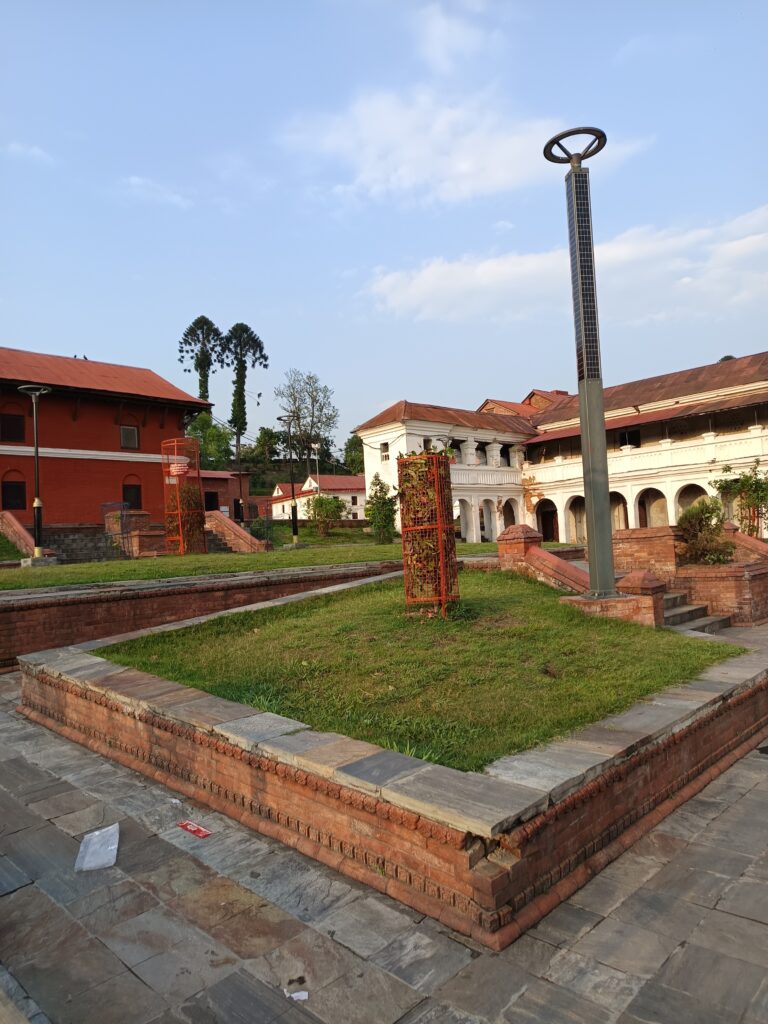

The Deeper Significance: A Universe in Microcosm
Pashupatinath Temple is not merely a place of worship. It is a living embodiment of core Hindu philosophies.
A Map of the Cosmos: The temple’s layout, with the central sanctum and surrounding shrines, is seen as a mandala, a symbolic representation of the cosmos.
The Cycle of Life and Death: Nowhere else is the cycle of Samsara so visibly integrated. On one side, you have the joyous celebration of life through festivals, prayers, and pilgrimages. Just a stone’s throw away, you have the final release of the soul through cremation. It presents a complete, unvarnished picture of existence.
A Sanctuary for All Beings: True to its name, the temple complex is a haven for animals—monkeys, dogs, cows, and pigeons roam freely, all under the protection of Pashupati, the Lord of Animals.
Pingback: Manakamana Devi Temple one of the most visited Hindu shrines
Very helpfull