
Introduction to Dakshinkali Temple
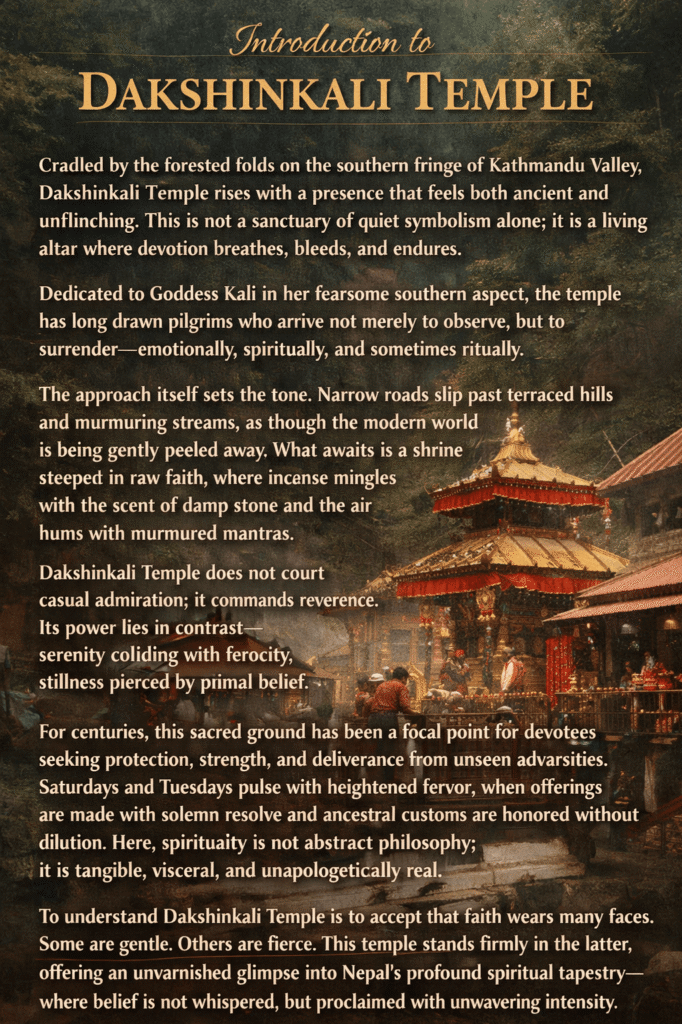
Table of Contents
Dakshinkali Temple stands on the southern edge of Kathmandu Valley, revered as one of the most powerful spiritual landmarks in Nepal. Known widely as Dakshinkali Temple The Sacred Power Center of Kathmandu , it is one of the most revered shrines dedicated to Goddess Kali. Nestled among the forested hills on the southern edge of the valley, Dakshinkali Temple rises with a presence that feels both ancient and unwavering. This is not merely a temple of quiet symbols; it is a living altar where devotion breathes, flows, and endures. Dedicated to Goddess Kali in her formidable southern aspect, the temple has long drawn pilgrims who come not just to observe, but to surrender—emotionally, spiritually, and sometimes ritually.
The approach itself sets the mood. Narrow roads wind through terraced hills and murmuring streams, as if the modern world is gradually slipping away. As devotees move closer to Dakshinkali Temple The Sacred Power Center of Kathmandu , the air thickens with incense and expectation. What awaits is a temple steeped in raw faith, where the scent of incense mingles with damp stone and the atmosphere hums with whispered mantras. Dakshinkali Temple does not seek casual admiration; it demands reverence. Its power lies in contrast—serenity colliding with ferocity, stillness pierced by primal belief.
For centuries, Dakshinkali Temple The Sacred Power Center of Kathmandu has been a focal point for devotees seeking protection, strength, and deliverance from unseen adversities. Saturdays and Tuesdays pulse with heightened fervor, when offerings are made with solemn resolve and ancestral traditions are honored without dilution. Here, spirituality is not abstract philosophy; it is tangible, visceral, and unapologetically real.
To understand Dakshinkali Temple The Sacred Power Center of Kathmandu is to accept that faith wears many faces. Some are gentle. Others are fierce. This sacred place stands firmly in the latter, offering an unvarnished glimpse into Nepal’s profound spiritual tapestry—where belief is not whispered, but proclaimed with unwavering intensity. In this way, Dakshinkali Temple The Sacred Power Center of Kathmandu remains not just a destination, but an enduring spiritual force etched into the soul of the Kathmandu Valley.

Historical Significance of Dakshinkali Temple
Dakshinkali Temple holds a profoundly important place in the religious and cultural history of Nepal. Revered today as Dakshinkali Temple The Sacred Power Center of Kathmandu , it is believed to have been established during the Malla period and is traditionally associated with King Pratap Malla of Kathmandu, who is said to have received a divine vision instructing him to worship Goddess Kali in her southern form. This revelation led to the sanctification of the site, which soon became one of the most revered Shakti temples in the Kathmandu Valley.
Historically, Dakshinkali Temple The Sacred Power Center of Kathmandu has been far more than a place of prayer—it has served as a powerful center of Tantric practice. The worship of Goddess Kali here reflects ancient Hindu traditions that emphasize transformation, protection, and the destruction of evil forces. Animal sacrifice, a ritual that continues even today, is rooted in these early Tantric beliefs and symbolizes the offering of ego and negative energies to the divine.
For centuries, the temple has remained a focal point of both royal patronage and popular devotion. Kings, nobles, and common people alike visited the shrine seeking victory in battles, protection from misfortunes, and guidance during times of uncertainty. The continued observance of rituals on Tuesdays and Saturdays has preserved traditions passed down through generations, largely unchanged, reinforcing the sacred authority of Dakshinkali Temple The Sacred Power Center of Kathmandu .
Today, Dakshinkali Temple stands as a living testament to Nepal’s enduring spiritual heritage. Its historical significance lies not only in its age, but also in its continuous role as a place where faith, ritual, and cultural identity converge—connecting the present with a deeply sacred past.
Origin and Royal Patronage
The origin of Dakshinkali Temple is closely connected to royal devotion and Tantric beliefs of medieval Nepal. Historical tradition links the temple’s formal establishment to King Pratap Malla of the Malla dynasty in the 17th century. It is believed that the king received divine guidance through a vision, instructing him to honor Goddess Kali at the southern edge of the Kathmandu Valley.
Royal patronage played a crucial role in shaping the temple’s importance. The Malla rulers provided land, resources, and protection to ensure uninterrupted worship. They also helped organize rituals by appointing hereditary priests who continued performing ceremonies according to ancient customs. This structured support transformed Dakshinkali from a local shrine into a major center of Kali worship.
The kings regarded Goddess Kali as a powerful protector of the state. Regular offerings and rituals were performed to seek strength, stability, and victory over adversity. Even after the end of the monarchy, the strong foundation created through royal patronage allowed the temple’s traditions to continue without disruption.
Today, Dakshinkali Temple stands as a lasting symbol of the deep connection between Nepal’s royal history and its enduring spiritual heritage.
Religious Importance and Spiritual Meaning
Dakshinkali Temple holds great religious significance in Hinduism, especially within the Shakta tradition, where God The story of Dakshinkali Temple begins with deep faith, fear, and devotion woven into the heart of medieval Nepal. Its origins are tied to a time when kings did not rule by power alone, but by belief. In the 17th century, King Pratap Malla of the Malla dynasty is believed to have received a divine vision—an encounter that changed the spiritual landscape of the Kathmandu Valley. Guided by this experience, he honored Goddess Kali at the valley’s southern edge, choosing a place where raw nature and sacred energy meet.
Royal support gave the temple life and continuity. The Malla kings offered land, protection, and resources, ensuring that worship never stopped. They entrusted the rituals to priestly families, passing sacred responsibilities from one generation to the next. What began as a quiet shrine slowly became a powerful center of Kali worship, shaped by discipline, tradition, and unwavering belief.
Symbolism of Dakshinkali
For the kings, Goddess Kali was more than a deity. She was a guardian of the kingdom, a source of courage in uncertain times. Rituals and offerings were acts of surrender and hope, performed to seek strength, stability, and victory over hardship at what is revered today as Dakshinkali Temple The Sacred Power Center of Kathmandu.
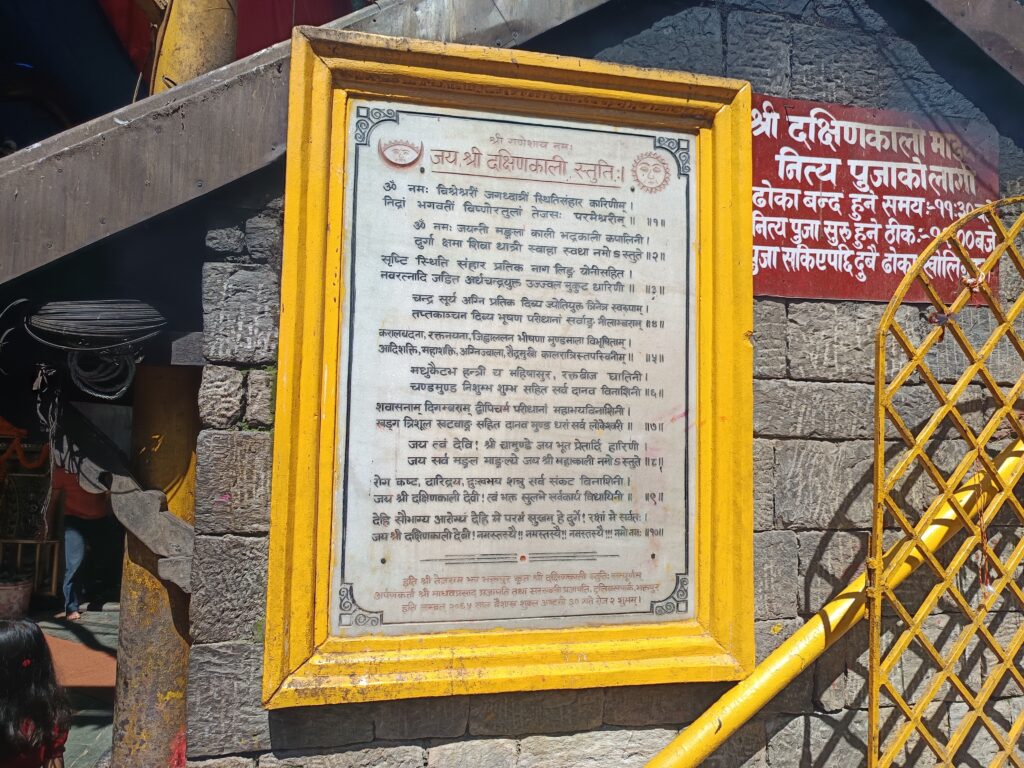
Even as monarchies faded and the world changed, the spirit of Dakshinkali remained untouched. Today, the temple stands not as a memory of royal power, but as a living bond between Nepal’s history and its enduring faith—a place where devotion still breathes, just as it did centuries ago. At Dakshinkali Temple The Sacred Power Center of Kathmandu , Goddess Kali is worshipped as the supreme force of time, power, and transformation. In her southern form, Dakshinkali represents protection, the destruction of evil, and the removal of obstacles that hinder both spiritual and worldly progress. Devotees believe that sincere worship here invokes the goddess’s fierce grace, granting strength in difficult times and courage in moments of fear.
Spiritually, the temple symbolizes the delicate balance between creation and destruction. Goddess Kali is not seen merely as a fearsome deity, but as a compassionate mother who removes ignorance, ego, and negative forces to reveal truth and inner peace. The rituals performed at Dakshinkali—ranging from offerings and prayers to traditional sacrifices—are symbolic acts of surrender, reflecting the devotee’s willingness to let go of attachments and transform inner weaknesses into spiritual strength.
The temple is especially important on Tuesdays and Saturdays, which are considered highly auspicious days for Kali worship. On these days, the atmosphere becomes deeply devotional, with chanting, offerings, and rituals strengthening a profound sense of spiritual connection. Many devotees visit Dakshinkali Temple The Sacred Power Center of Kathmandu seeking protection from unseen dangers, relief from personal struggles, and blessings for success, health, and harmony.
On a deeper level, Dakshinkali Temple reminds us that spirituality is not always gentle or comforting. It can be intense, challenging, and transformative. The spiritual meaning of the temple lies in its call to face fear, embrace change, and trust in the divine force that both destroys and protects—guiding devotees toward inner strength and spiritual awakening.
Dakshinkali is not meant to be understood easily. She is meant to be felt—deep in the chest where fear lives, in the silence where truth waits. One does not simply look at her symbolism; one must struggle with it, sit with its discomfort, and finally embrace it. She is frightening because truth itself is frightening. She is dark because reality is vast, limitless, and beyond illusion. She appears destructive because every real transformation demands an ending. This is the living essence encountered at Dakshinkali Temple The Sacred Power Center of Kathmandu, where devotion is not passive but profoundly confronting.
And yet, within all that intensity, an ocean of compassion quietly flows.
Dakshinkali does not wear softness on her face, but her heart is immeasurably tender. Her mercy does not come wrapped in comfort—it comes wrapped in clarity. She tears away what is false so that what is real can finally breathe. What feels like loss is often protection. What feels like pain is often release. Pilgrims who come to Dakshinkali Temple The Sacred Power Center of Kathmandu often leave changed, not because their prayers were answered gently, but because their illusions were answered honestly.
She does not ask for blind devotion. Dakshinkali asks for honest surrender—the kind where masks fall, egos dissolve, and excuses die. She asks you to stand naked before truth, without fear of being judged. And when you do, she gives something far greater than comfort: liberation through truth. This is why Dakshinkali Temple The Sacred Power Center of Kathmandu is not merely a place of worship, but a crucible where the soul is stripped, tested, and finally set free.
Architecture and Natural Setting
Traditional Nepali Temple Design
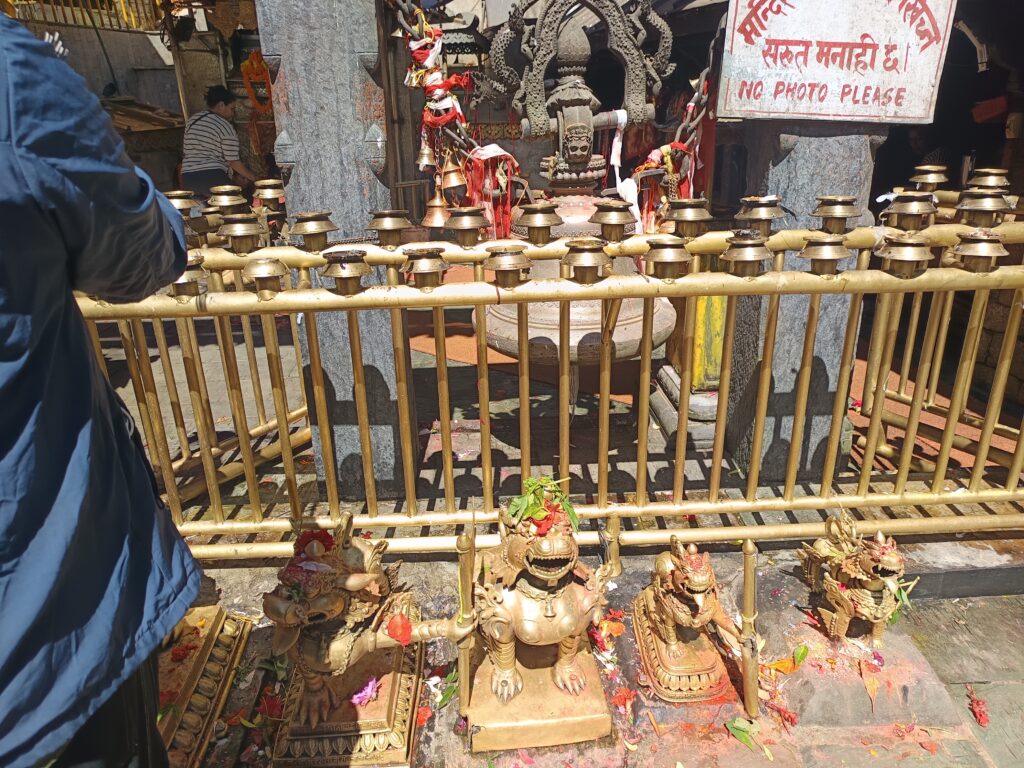
The structure of Dakshinkali Temple reflects classic Newari architecture, featuring a pagoda-style roof, intricately carved wooden struts, and stone idols. The sanctum houses the black stone idol of Goddess Kali, adorned with vermillion, flowers, and sacred offerings.
Forest Surroundings and Sacred Atmosphere
Nestled in a forested area near the Bagmati River, the temple’s environment enhances its spiritual aura. The sound of flowing water, rustling leaves, and rhythmic chanting creates an atmosphere ideal for meditation and devotion
Visitor Information and Travel Guide
Dakshinkali Temple is easily accessible from Kathmandu:
By Road: Public buses and taxis are available from Kalanki and Old Bus Park
Travel Time: Approximately 1 to 1.5 hours depending on traffic
The scenic drive through hills and forests makes the journey spiritually refreshing  .
.
Best Time to Visit
October to April: Pleasant weather and festival season
Early Morning: Ideal for peaceful worship and avoiding crowds
Cultural and Social Impact
A Pillar of Local Belief
For local communities, Dakshinkali Temple is not just a religious site—it is a cultural anchor. Life events such as business ventures, travel plans, and major decisions often begin with a visit to the goddess.
Conclusion:
The Timeless Power of Dakshinkali Temple
Dakshinkali Temple remains a beacon of uncompromising faith and ancient wisdom. Its presence continues to command reverence in a rapidly modernizing world. For devotees, spiritual seekers, and cultural explorers, this sacred site offers something rare—